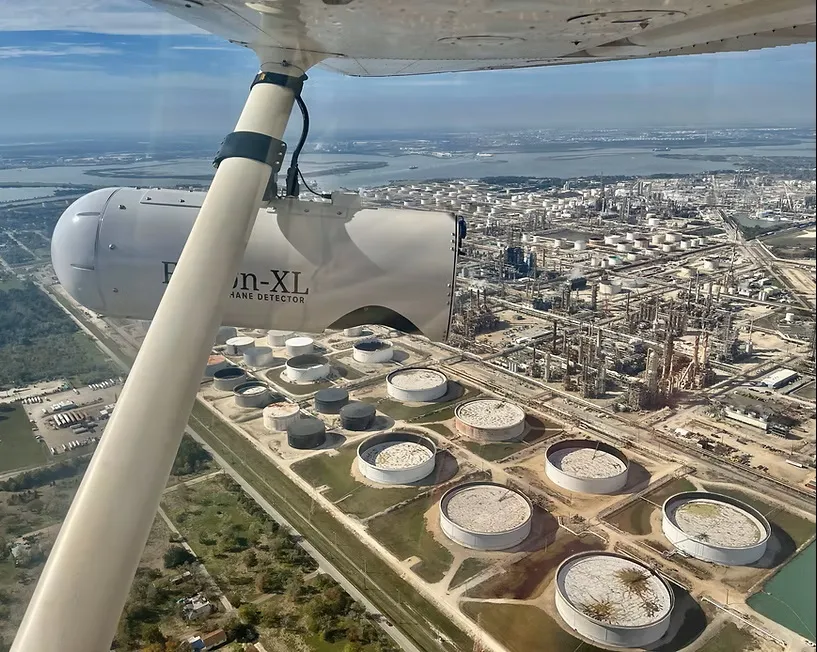
Energy Transfer, one of North America’s largest pipeline operators with over 130,000 miles of infrastructure, has publicly recognized Minnesota-based Vanguard Pipeline Inspection’s Falcon XL Aerial Methane Detection Technology as a transformative solution for pipeline safety and environmental compliance.
In a September 2025 announcement on their official Energy Transfer Facts blog, Energy Transfer revealed that Vanguard’s TDLAS-based technology has enabled them to survey more than 44,000 miles of natural gas transmission pipeline—a milestone that demonstrates both the system’s operational scalability and its value as a critical tool for advancing leak detection capabilities across large-scale pipeline networks.
Industry Milestone: 44,000+ miles surveyed represents one of the most extensive deployments of advanced aerial methane detection technology in the North American pipeline sector.
The partnership between Energy Transfer and Vanguard Pipeline Inspection extends beyond a typical vendor-customer relationship. Energy Transfer engaged with the Minnesota-based technology provider during the Falcon XL’s development phase, providing research and development funding and technical guidance to ensure the technology met real-world operational requirements for pipeline leak detection.
This collaborative approach enabled Vanguard to refine the Falcon XL system with direct input from one of the industry’s most experienced pipeline operators, ensuring the technology addressed actual field conditions while maintaining focus on safety, environmental performance, and regulatory compliance.
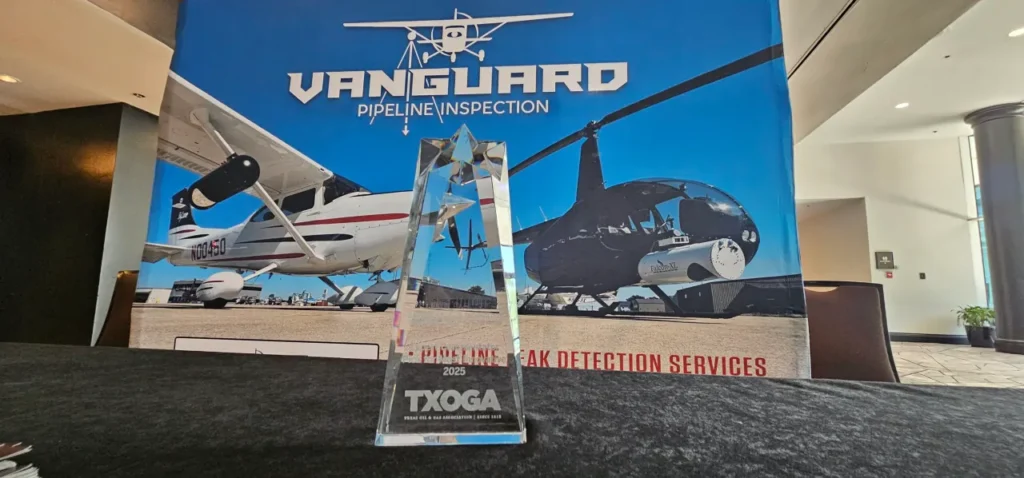
The results of this partnership were recently recognized at the Texas Oil & Gas Association’s Energy Elevated Technology Showcase on September 4, 2025, where Energy Transfer and Vanguard received the Expert Commentator Pick for Most Innovative 2025 following their joint presentation on advanced aerial leak detection methods.
This recognition from industry experts underscores the Falcon XL’s position as a leading PHMSA-compliant solution for pipeline operators seeking to implement next-generation methane detection capabilities.
Vanguard’s Falcon XL system employs tunable diode laser absorption spectroscopy (TDLAS)—an advanced laser-based technology that represents the current state-of-the-art in aerial methane detection for natural gas pipeline inspection. Unlike optical imaging systems that only visualize methane plumes, TDLAS technology provides precise, quantitative measurements of methane concentrations from aircraft altitudes, enabling accurate leak detection and characterization.
Continuous Laser Curtain™ Coverage Architecture
The Falcon XL’s proprietary laser scanning approach creates what Vanguard calls a “Continuous Laser Curtain”—enabling uninterrupted methane detection along pipeline routes without gaps in coverage that can occur with other aerial detection methods. This continuous coverage ensures that even small leaks are detected during routine pipeline patrol operations.
Fixed-Wing and Rotary Aircraft Integration
The TDLAS-based technology functions on both fixed-wing aircraft and helicopters, allowing pipeline operators to integrate advanced leak detection into existing aerial patrol operations without requiring dedicated aircraft or significant operational changes. This flexibility reduces implementation costs while enhancing detection capabilities.
Superior Sensitivity for Early Leak Detection
The Falcon XL system detects methane emissions at concentrations well below the detection limits of traditional pipeline inspection methods, enabling operators to identify and address minor leaks before they become major safety or environmental concerns. Early detection supports proactive maintenance and emissions reduction objectives.
Real-Time Detection and Geolocation
Unlike periodic ground-based inspections that can take weeks to complete, the Falcon XL provides immediate detection and precise geolocation data, allowing pipeline operators to respond to potential issues quickly and effectively. Real-time data enables faster repair response and reduces methane emissions.
The timing of Energy Transfer’s technology validation is particularly significant given upcoming changes to federal pipeline safety regulations. The Pipeline and Hazardous Materials Safety Administration (PHMSA) is implementing new requirements for advanced leak detection on natural gas transmission pipelines, with compliance timelines beginning in 2025.
PHMSA regulations specifically recognize advanced aerial technologies as acceptable methods to meet enhanced leak detection requirements, positioning TDLAS-based systems like the Falcon XL as proven compliance solutions for operators managing extensive pipeline networks across diverse geographic regions.
Energy Transfer’s deployment of Vanguard’s technology across 44,000+ miles of pipeline demonstrates how advanced TDLAS-based aerial detection can be implemented at scale to meet both PHMSA regulatory requirements and operational safety objectives while supporting environmental performance goals.
Energy Transfer’s public endorsement carries significant weight in the pipeline industry. As noted in their announcement, the company selected Vanguard’s technology based on its potential to “transform aerial leak detection” and has actively supported its development to benefit the broader natural gas transmission sector.
The scale of implementation—44,000 miles surveyed across diverse geographic conditions—provides compelling evidence that advanced aerial methane detection technology has matured from experimental to operational status. This milestone addresses a common concern among pipeline operators: whether new detection technologies can operate reliably across varying terrain, weather conditions, and pipeline configurations.
For pipeline operators evaluating their approach to enhanced leak detection and PHMSA compliance, Energy Transfer’s experience demonstrates that TDLAS-based aerial systems can deliver:
The most significant aspect of the Energy Transfer-Vanguard partnership is the collaborative development approach. Energy Transfer didn’t simply purchase technology—they invested in its development, provided technical expertise from experienced pipeline operations teams, and helped shape the system to meet actual operational needs in the field.
This partnership model reflects a broader industry shift toward strategic collaboration between major pipeline operators and technology providers, in which companies actively participate in developing the tools that will define future safety and environmental standards for natural gas transmission.
By publicly sharing their experience with the Falcon XL technology, Energy Transfer is contributing to industry-wide advancement in pipeline leak detection capabilities. This transparency helps other operators evaluate proven solutions for their own PHMSA compliance and safety enhancement programs.
With 44,000 miles of successful deployment validation, award recognition from the Texas Oil & Gas Association, and endorsement from one of North America’s largest pipeline operators, Vanguard’s Falcon XL TDLAS technology has demonstrated its readiness for large-scale implementation across the natural gas transmission sector.
As PHMSA regulations take effect and operators seek proven solutions for enhanced leak detection, the Energy Transfer partnership provides a clear case study in how advanced TDLAS-based aerial technology can be deployed effectively to meet both compliance requirements and operational excellence objectives.
Energy Transfer published a detailed account of its partnership with Vanguard Pipeline Inspection and the deployment of the Falcon XL TDLAS technology on its official Energy Transfer Facts blog. The announcement offers insight into how major pipeline operators are investing in next-generation leak detection technology to enhance safety and environmental performance.
Read the complete Energy Transfer announcement here →
Major operators like Energy Transfer deploy Vanguard Pipeline Inspection’s Falcon XL TDLAS technology to meet evolving pipeline safety requirements and environmental performance objectives. Our Minnesota-based team specializes in scalable, aircraft-integrated aerial methane-detection solutions for natural gas transmission operators nationwide.
Contact: (320) 302-6000
Email: info@vanguardpipeline.com
Service Areas: Nationwide pipeline leak detection services
Tunable diode laser absorption spectroscopy (TDLAS) is an advanced laser-based technology that measures methane concentrations by analyzing how methane molecules absorb specific wavelengths of laser light. The Falcon XL system emits laser beams from aircraft, measures the absorption, and calculates precise methane concentrations along pipeline routes. This provides quantitative leak detection data superior to visual-only methods.
The Falcon XL’s TDLAS-based detection capabilities align with PHMSA’s recognition of advanced aerial technologies as acceptable methods for enhanced leak detection on natural gas transmission pipelines. The system provides continuous coverage, precise geolocation, and sensitivity levels that meet regulatory performance standards for advanced detection methods.
Aerial detection systems like the Falcon XL provide continuous coverage of entire pipeline routes in hours rather than weeks, detect leaks from a consistent altitude regardless of terrain access, and integrate with routine patrol operations to improve cost efficiency. Accessibility, coverage gaps, and time constraints for extensive pipeline networks limit the use of ground-based methods.
Yes. The Falcon XL is designed for installation on both fixed-wing aircraft and helicopters already used for pipeline patrol. This allows operators to add advanced methane-detection capabilities without acquiring dedicated aircraft or significantly altering operational procedures. Energy Transfer’s 44,000-mile deployment demonstrates this integration at scale.
TDLAS technology detects methane concentrations well below traditional inspection method limits, enabling identification of minor leaks before they become significant safety or environmental concerns. The technology provides quantitative measurements rather than simple detection, allowing operators to characterize leak severity and prioritize response.
Vanguard Pipeline Inspection, based in Minnesota, provides aerial methane detection services for natural gas transmission pipeline operators nationwide. Our aircraft-based technology enables rapid deployment across diverse geographic regions and terrain types.
Vanguard Pipeline Inspection provides advanced aerial methane detection services using proprietary Falcon XL TDLAS technology. Based in Minnesota and serving pipeline operators nationwide, Vanguard specializes in scalable, aircraft-integrated leak-detection solutions that meet PHMSA regulatory requirements and environmental performance standards for the natural gas transmission industry.
Our technology is trusted by major pipeline operators including Energy Transfer for large-scale deployment across thousands of miles of natural gas transmission infrastructure.
Vanguard Pipeline Inspection, LLC
Minnesota-Based | Nationwide Service
Phone: (320) 302-6000
Email: info@vanguardpipeline.com
Web: www.vanguardpipeline.com